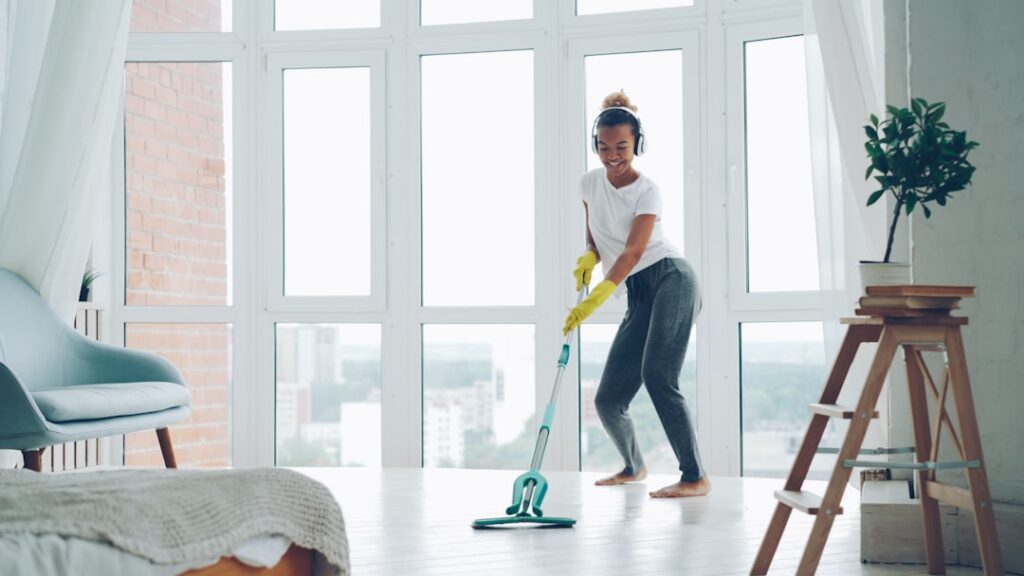
Knowing how to clean hardwood floors correctly is the single most important thing you can do to protect your investment. The right routine keeps floors looking beautiful for decades. The wrong approach — too much water, the wrong products, steam mops — can cause irreversible damage that only refinishing can fix.
This guide walks you through a complete cleaning schedule from daily dust mopping to annual deep cleaning, explains the critical difference between caring for polyurethane-finished and oil-finished floors, and warns you about the common mistakes that destroy hardwood.
- Daily Cleaning: Dust Mopping & Sweeping
- Weekly Cleaning: Vacuuming
- Damp Mopping Technique
- Monthly Deep Cleaning
- Seasonal & Annual Care
- What Damages Hardwood Floors
- Poly-Finished vs Oil-Finished Care
- Best Cleaning Products for Hardwood Floors
- Common Stain Removal
- A Practical Routine for Cleaning Polyurethane Floors
- Frequently Asked Questions
- Can I use vinegar to clean hardwood floors?
- Can I use a steam mop on hardwood floors?
- How often should I damp mop hardwood floors?
- What is the best mop for hardwood floors?
- Should I clean hardwood floors before or after vacuuming?
- How do I know when hardwood floors need refinishing instead of just cleaning?
- Can I use a Swiffer on hardwood floors?


Daily Cleaning: Dust Mopping & Sweeping
The most important step in how to clean hardwood floors happens every day: removing loose dirt, dust, and grit before it gets ground into the finish. Fine grit particles act like sandpaper under foot traffic, slowly scratching through your floor’s protective coating. A 30-second pass with a dust mop prevents this damage entirely.
Microfiber dust mops are the gold standard. Their electrostatically charged fibers attract and trap dust, pet hair, and fine particles far more effectively than traditional brooms. Use a large (18- to 24-inch) flat mop head and work in long, overlapping strokes with the grain of the wood.
Soft-bristle brooms work if you prefer sweeping, but they tend to push fine dust around rather than capturing it. Avoid stiff-bristle brooms — they can scratch softer wood species like pine, fir, and walnut.
Focus on high-traffic zones: entryways, kitchen work areas, and hallways. These areas collect the most grit and benefit most from daily attention. Lower-traffic rooms like bedrooms and formal dining rooms can often go 2 to 3 days between dust mopping.
Weekly Cleaning: Vacuuming
A vacuum picks up what dust mops miss — crumbs wedged along baseboards, pet hair caught in floor register vents, and grit trapped between planks. Vacuum hardwood floors at least once per week, or more often in homes with pets or children.
Use a soft brush roll or hard-floor setting. Standard carpet beater bars spin at high speed and can scratch hardwood finishes. Many modern vacuums have a hard-floor mode that turns off or slows the brush roll. Canister vacuums with a dedicated hard-floor head are the safest option.
Avoid rubber wheels and plastic edges. Some vacuums have hard plastic bumpers or unprotected rubber wheels that leave marks on wood floors. Choose a vacuum with felt-padded wheels or soft bumper guards.
Do not skip baseboards and corners. Use a crevice tool or soft brush attachment along walls, under cabinets, and around furniture legs. These areas accumulate dust bunnies that eventually migrate onto the floor.
Damp Mopping Technique
Damp mopping is where most hardwood cleaning mistakes happen. The key word is damp — not wet. Water is hardwood’s primary enemy, and the difference between a properly wrung mop and a dripping one can be the difference between clean floors and warped boards.
Step 1: Dust mop or vacuum first. Never damp mop over loose grit. You will drag it across the finish and create micro-scratches.
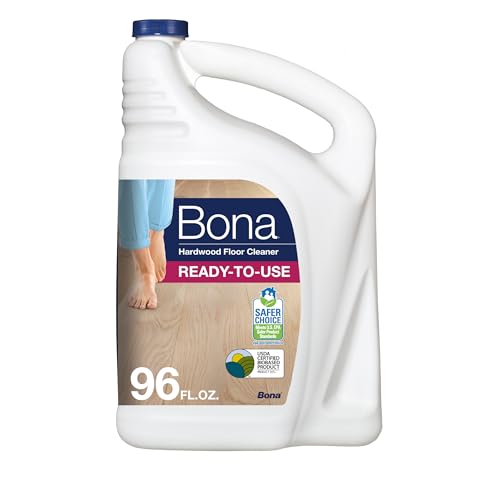
Step 2: Prepare your solution. Use a pH-neutral hardwood floor cleaner diluted according to the label. Bona Hardwood Floor Cleaner is the most widely recommended by flooring manufacturers.
Step 3: Wring the mop thoroughly. Spray the cleaning solution lightly onto the floor or onto the mop head itself — do not dip the mop into a bucket of water. If using a bucket, wring the mop until it feels almost dry. You should not see standing moisture on the floor behind the mop.
Step 4: Mop with the grain. Work in the direction of the wood grain using long, overlapping strokes. This pushes cleaning solution into the grain pattern for better dirt removal and prevents streaks.
Step 5: Dry immediately. Go over the floor with a dry microfiber pad or towel to pick up any residual moisture. This step is especially important for floors with beveled edges, where water can pool in the grooves between planks.
Damp mop once per week in most homes. Kitchens may need damp mopping 2 to 3 times per week due to food spills and cooking residue. Choose the best mop for hardwood floors — a spray mop with a microfiber pad is the safest and most convenient option.
Monthly Deep Cleaning
Once a month, go beyond routine damp mopping with a more thorough cleaning session that targets buildup, grime in textured grain, and dull spots.
Use a concentrated hardwood floor cleaner. Many daily-use cleaners are diluted for light maintenance. For monthly deep cleaning, use the product at full concentration or choose a dedicated deep-cleaning formula. Apply it with a microfiber mop and give it 1 to 2 minutes of dwell time before mopping it up.
Address sticky spots and scuff marks. Rub scuff marks with a clean tennis ball or a damp cloth with a drop of floor cleaner. For sticky residue (tape, food, adhesive), use a plastic scraper and floor cleaner — never a metal blade.
Clean under furniture. Move lightweight furniture and area rugs to clean beneath them. Dust and grit accumulate under couches, beds, and rugs, and this buildup can scratch the floor when furniture is shifted.
Inspect for damage. Monthly deep cleaning is the perfect time to check for scratches, wear patterns, or areas where the finish looks thin. Catching damage early lets you address it with spot treatment or polish before it worsens.
Seasonal & Annual Care
Winter: Indoor humidity drops when heating systems run, causing hardwood to contract. Gaps between planks may appear. Run a humidifier to keep indoor humidity between 35% and 55%. Place mats at all entry doors to catch salt, snow, and ice-melt chemicals — these are extremely damaging to wood finishes.
Spring: Deep clean to remove winter salt and grime residue. Check under area rugs for any moisture damage from tracked-in snow. This is a good time to apply hardwood floor polish to refresh the finish before summer.
Summer: Humidity rises, and hardwood absorbs moisture from the air and expands. Close windows during very humid periods or run a dehumidifier if indoor humidity exceeds 55%. Direct sunlight through windows can fade and discolor hardwood — use blinds or UV-protective window film.
Fall: Another good time for deep cleaning and polish application before the holiday season. Trim pet nails (more indoor time during colder months) and check felt pads on furniture legs.
Annual care checklist:
- Strip and reapply hardwood floor polish if you use it (once per year minimum)
- Replace worn felt pads on all furniture legs
- Rotate area rugs to prevent uneven fading underneath them
- Check all entry mats and replace if worn thin
- Inspect high-traffic areas for finish wear — if bare wood is showing, schedule refinishing
- Have HVAC humidity control serviced to ensure consistent indoor climate
What Damages Hardwood Floors
Understanding what not to do is just as important as knowing how to clean hardwood floors properly. These are the most common damage culprits.
| Damaging Agent | What It Does | How to Prevent |
|---|---|---|
| Standing water | Penetrates between planks, swells wood, causes warping and black stains | Wipe spills immediately; never wet mop |
| Vinegar | Acid dulls and degrades polyurethane finish over time | Use pH-neutral hardwood cleaner instead |
| Steam mops | Forces hot moisture into joints and grain, causing swelling and finish failure | Never use on hardwood — use damp microfiber mops |
| Oil soap (Murphy’s) | Leaves residue buildup that dulls the floor and interferes with future refinishing | Use only manufacturer-recommended cleaners |
| Grit and sand | Acts as sandpaper under foot traffic, scratching finish | Daily dust mop; entry mats at all doors |
| High heels | Concentrate body weight on tiny points, denting even hard species | No-shoes policy or protective felt pads |
| Direct sunlight | UV rays fade and discolor wood unevenly | Blinds, curtains, or UV window film |
| Rubber-backed rugs | Trap moisture and cause discoloration/finish peeling | Use rugs with breathable, non-rubber backing |
Poly-Finished vs Oil-Finished Care
The cleaning approach differs depending on your floor’s finish type. Using the wrong products or techniques can cause damage.
Polyurethane-finished floors (the majority of modern hardwood) have a hard surface film. Dirt sits on top of the finish, making cleaning straightforward. Use pH-neutral spray cleaners, damp microfiber mops, and water-based polish for sheen restoration. These floors are more forgiving of occasional over-dampening but should still never be wet-mopped.
Oil-finished floors (Rubio Monocoat, Bona Craft Oil, Osmo) have no surface film — the oil penetrates and hardens within the wood fibers. Dirt can embed more easily, and the floor absorbs spills faster. Clean with the oil manufacturer’s specific soap or cleaner. Never use standard hardwood polish or water-based products — they will cloud or haze an oil-finished floor. Periodically re-oil high-traffic areas according to the manufacturer’s schedule (typically every 6 to 12 months).
Best Cleaning Products for Hardwood Floors
| Product | Type | Best For | Price (approx.) |
|---|---|---|---|
| Bona Hardwood Floor Cleaner | pH-neutral spray | Daily/weekly poly-finished floors | $8 – $12 / 36 oz |
| Bona PowerPlus Deep Clean | Concentrated cleaner | Monthly deep cleaning | $10 – $14 / 36 oz |
| Method Squirt + Mop Wood Floor Cleaner | Plant-based spray | Eco-conscious daily cleaning | $5 – $7 / 25 oz |
| Rubio Monocoat Soap | Oil-floor soap | Oil-finished floor maintenance | $20 – $30 / 33 oz |
| Pallmann Clean | Neutral concentrate | All poly-finished floors | $15 – $20 / 34 oz |
Avoid all-purpose household cleaners (Pine-Sol, Fabuloso, Mr. Clean) on hardwood. They are formulated for tile, vinyl, and laminate and often contain surfactants, fragrances, or pH levels that degrade hardwood finishes.
Common Stain Removal
Water marks (white rings or spots): These are usually in the finish, not the wood. Apply a small amount of hardwood floor polish, rub gently with a soft cloth, and let dry. For stubborn marks, try a paste of baking soda and water applied for 5 minutes, then wipe clean.
Pet urine: Blot immediately with paper towels. Clean with an enzyme-based pet stain remover, then follow with hardwood floor cleaner. Old, dried pet stains that have penetrated to the wood may require sanding and refinishing.
Scuff marks: Rub gently with a clean tennis ball or a damp microfiber cloth. For stubborn scuffs, apply a small amount of floor cleaner directly and rub in a circular motion.
Grease or oil: Apply a small amount of dish soap mixed with warm water on a cloth. Wipe the area gently, then clean with hardwood floor cleaner and dry thoroughly.
Ink or marker: Dab (do not rub) with a cloth dampened with rubbing alcohol. Work from the outside in to prevent spreading. Clean the area with floor cleaner afterward.
A Practical Routine for Cleaning Polyurethane Floors
Most hardwood floors installed or refinished in recent decades carry a polyurethane topcoat. Cleaning polyurethane floors is really about caring for that plastic like film, not the wood under it. Once you know how the finish behaves, it is easier to pick products, fix dull spots and know when the surface needs more than a mop.
Oil Based Versus Water Based Polyurethane
Oil based polyurethane has an amber tone and a slightly softer surface that shows fine scratches as a gray haze. Water based polyurethane looks clearer and dries harder, but it can show smudges and footprints more easily on darker stains. Both respond well to the same basic routine, but water based finishes are more prone to streaking if too much cleaner is used. If you are unsure which you have, check the color: strong amber yellowing on light wood usually indicates an oil based product. A newly coated floor needs gentle care for about 2 to 4 weeks while the finish fully cures, so dry mop only and avoid rugs during that period.
Restoring Dull Traffic Lanes
Dull paths in a hallway or in front of the sink are usually fine scratches in the top of the finish, not dirt. A deep clean will not fix them. A maintenance coat or a buff and recoat, where the existing finish is lightly abraded with a fine screen and a fresh coat applied, restores sheen without sanding to bare wood. Avoid floor polishes and acrylic refreshers as a quick fix; they can build up, peel and interfere with future recoats.
Removing Haze and Product Buildup
A cloudy, sticky or streaky polyurethane floor is often coated in residue from oil soaps, wax or too much cleaner. Mop with a microfiber pad dampened in warm water with a small splash of isopropyl alcohol, and follow with a clean, nearly dry pad. Ventilate the room and keep the alcohol well diluted. Never mix cleaning products, especially bleach with ammonia or acids. If residue persists, a professional cleaning system designed for finished wood can remove it before any recoat.
Spotting Finish Wear Before It Becomes Damage
Try a simple water drop test in a high traffic area. If the bead sits on the surface, the finish is intact. If it soaks in and darkens the wood within a few minutes, the polyurethane has worn through, and cleaning water will start to stain boards. Gray or black areas near doors and pet bowls are another sign of exposed wood. Recoating at the first signs of wear is far less costly than sanding the entire floor later. Keep a simple log of when the floor was last coated, since most busy homes benefit from a fresh maintenance coat every 3 to 5 years.
Frequently Asked Questions
Can I use vinegar to clean hardwood floors?
No. Vinegar is acidic (pH 2 to 3) and gradually breaks down polyurethane finishes, leaving floors dull and unprotected. While a single use will not cause visible damage, repeated cleaning with vinegar will degrade the finish over months. Use a pH-neutral hardwood floor cleaner instead.
Can I use a steam mop on hardwood floors?
No. Steam mops force hot moisture into wood grain, between planks, and through micro-cracks in the finish. This causes swelling, warping, and finish peeling — often in ways that are not immediately visible but worsen over time. No hardwood flooring manufacturer recommends steam cleaning.
How often should I damp mop hardwood floors?
Once per week for most homes. Kitchens and entryways may need damp mopping 2 to 3 times per week. Always dust mop or vacuum first to remove loose grit, and use a well-wrung microfiber mop with a hardwood-safe cleaner.
What is the best mop for hardwood floors?
A flat spray mop with a reusable microfiber pad is the safest and most effective option. It lets you control the amount of moisture applied and keeps the mop head barely damp. Our best mop for hardwood floors guide compares the top options.
Should I clean hardwood floors before or after vacuuming?
Vacuum or dust mop first, then damp mop. Removing loose grit before applying any moisture prevents scratching. Think of it like washing a car — you rinse off loose dirt before scrubbing with a sponge.
How do I know when hardwood floors need refinishing instead of just cleaning?
If cleaning no longer restores the floor’s appearance, the finish is likely worn through. Signs include gray or bare wood in traffic areas, water soaking into the wood instead of beading on the surface, deep scratches that catch a fingernail, and persistent dullness even after polishing. See our hardwood floor refinishing guide for next steps.
Can I use a Swiffer on hardwood floors?
Dry Swiffer pads are safe for daily dust pickup and work similarly to a microfiber dust mop. Swiffer WetJet is more controversial — the cleaning solution is generally safe for polyurethane floors, but the pad can leave excess moisture in plank joints. A microfiber spray mop with a dedicated hardwood cleaner gives you more control and better results.
Prefer to explore on your own?
See how new flooring looks in your actual room in seconds — free, no signup.
Try the free Floor Studio →